
In late 2025, reporting on "nudify" apps buying ad space on Facebook and Instagram put Meta's ad platform under its harshest scrutiny in years. Follow-up investigations raised even darker concerns about AI-generated abuse imagery getting past review. Advertisers running legitimate AI creative have felt the fallout as stricter reviews, unexpected disapprovals, and real confusion about what's allowed. This article separates the scandal from the policy and lays out what Meta actually requires from AI ad content in 2026.
What's actually happening: the AI ad content controversy at Meta
The headlines weren't about marketers using ChatGPT to write hooks or Midjourney to build a background. They targeted a specific class of bad actor: apps that used generative AI to produce non-consensual "nudify" imagery, then paid Meta to advertise those tools to large audiences. Reporters found some of these ads running for extended periods before takedown. That raised an uncomfortable question. How does ad review catch routine violations and miss some of the most serious ones?
Meta's public response has been to lean harder on existing Community Standards enforcement and to invest in detecting AI-manipulated imagery of real people. That's good for brand safety overall, but it carries a side effect. Review systems appear more sensitive to anything resembling a manipulated photo of a person, and that can include legitimate AI product shots, lifestyle scenes, and UGC-style creative with human models. The policy text hasn't fundamentally changed. The enforcement climate has.
The point: Meta didn't ban AI-generated ads. It got more aggressive about catching AI-generated abuse, and that tighter net now catches legitimate advertisers more often.
Meta's current AI-generated ad disclosure requirements
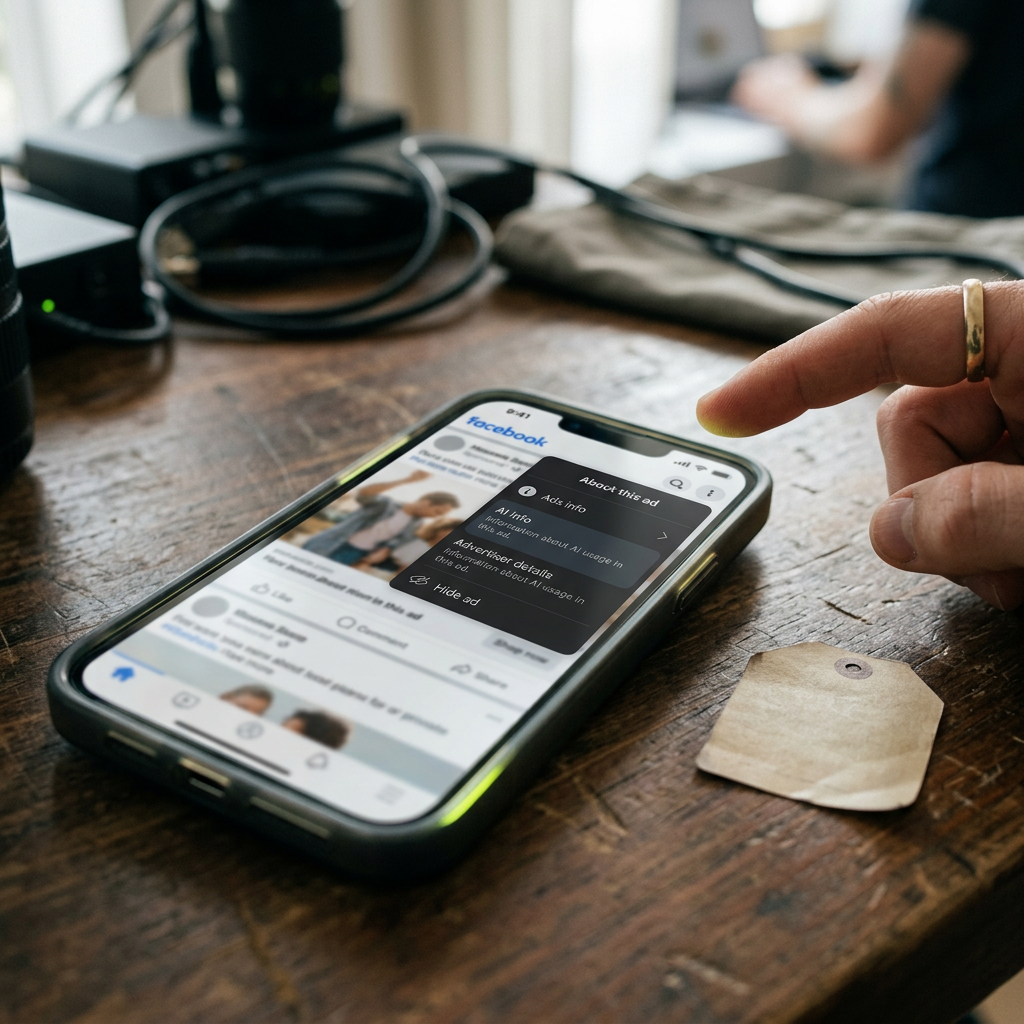
The core policy is simple, even if the rollout hasn't been. According to Meta's help documentation, an ad image created or significantly edited with Meta's generative AI creative features, or with a third-party AI tool, may carry an "AI info" label. The label appears on the "About this ad" screen, reached through the three-dot menu, and in some placements next to the Sponsored or "Ad" tag at the top of the unit.
"Significant" is the word doing the work. Meta draws the line like this:
- Requires a label: background generation, image generation, generative fill, synthetic scenes or subjects, substantial AI-driven alteration of the original image.
- Does not require a label: resizing, cropping, color correction, minor retouching, and other edits that don't materially change what's depicted.
One category has no threshold at all: ads about social issues, elections, or politics. If any image, video, or audio in those ads was created or edited with AI, you must disclose it, however minor the edit. We cover how this plays out across formats in our guide to Meta's AI ad labels for advertisers.
Meta also acknowledges the rollout is uneven, noting that not all ads using its generative AI features will show AI info yet. That inconsistency fuels a lot of advertiser confusion and signals the rules are still being refined. For where labeling stands now, see our 2026 labeling update.
How this affects legitimate advertisers using AI creative tools
Generating product photography, lifestyle scenes, or UGC-style hooks with AI breaks no rule. Still, advertisers and agencies commonly report three practical shifts since the scandal broke:
- Review can take longer. Ads featuring AI-generated people, including stock-style spokespeople and synthetic testimonial actors, seem to land in secondary review more often. Give yourself an extra day or two before any launch deadline.
- "Person" creative is more likely to be flagged. Imagery that looks like a real, identifiable person being manipulated can trip classifiers built to catch non-consensual content, even when the persona is fully synthetic. Product shots and object-based scenes are far less exposed.
- Account history matters more. A pattern of disapprovals, especially around imagery of people, raises the odds of a broader account review instead of isolated ad rejections.
None of this means AI creative is suppressed by the algorithm. Meta describes the label as a transparency signal for users, and nothing in its documentation frames it as a delivery penalty. Rejections stem from policy violations. A label on a compliant ad is just a label.
| Myth | What's actually true |
|---|---|
| AI-generated ads get deprioritized by Meta's algorithm | Meta presents the AI info label as a disclosure, not a quality or delivery penalty. |
| Any AI tool use requires manual disclosure in ad copy | Self-disclosure is required for social issue, election, and political ads; otherwise Meta's systems apply the label |
| Minor touch-ups like color correction trigger labeling | Minor edits are explicitly excluded; only significant generation or alteration requires a label |
Separating labeling myths from Meta's documented policy.
Red flags that get AI ads flagged or rejected
Most AI ad rejections trace back to a few recurring patterns, not to the use of AI:
- Synthetic depictions of real, identifiable people without consent, including stylized or satirical ones. This is the enforcement zone that tightened most after the nudify-ad reporting.
- Imagery that sexualizes or partially undresses a generated human figure, whatever the intent. Meta's Adult Nudity and Sexual Activity and Child Sexual Exploitation, Abuse and Nudity policies apply to AI and non-AI content alike.
- Before/after body transformation claims generated or exaggerated with AI, which run into Fraud and Deception rules on misleading claims.
- Deepfake-style endorsements: AI voices or faces implying a celebrity or public figure backs a product.
- Landing pages that don't deliver the ad's promise, a classic Fraud and Deception trigger that now gets closer scrutiny.
Notice what's missing: "used an AI tool." Enforcement targets content, not tooling. Plenty of advertisers miss this, and it's exactly where the difference between Meta's native AI features and third-party generators matters. Our piece on Meta's AI ads vs. third-party AI ad creative tools walks through the production and compliance tradeoffs.
Meta isn't punishing AI creative. It's punishing the handful of use cases that were always banned, and getting much better at catching them.
Choosing a compliant, brand-safe AI ad generation platform
The nudify-ad scandal involved a narrow category of tools built to manipulate images of real, non-consenting people, which then bought ads to market themselves. That's a different product category from AdGenz, which generates Facebook and Instagram ad creative from your own brand assets, product photography, and messaging, inside guardrails designed around Meta's policy framework rather than around evading it.
When evaluating any AI ad tool right now, run it through this filter:
In practice, ask vendors three direct questions. Can users upload photos of real people for manipulation? Is there a moderation layer that blocks sexualized or deceptive outputs before they reach your ad account? Does the output read as clearly commercial, brand-led content, or as generic AI imagery that could come across as deceptive? A vendor that can't answer cleanly is a liability, particularly while reviewers are this sensitive. For vetted options by business size and use case, see our comparison of the best AI ad generators for small business in 2026.
Checklist: staying compliant while scaling AI creative
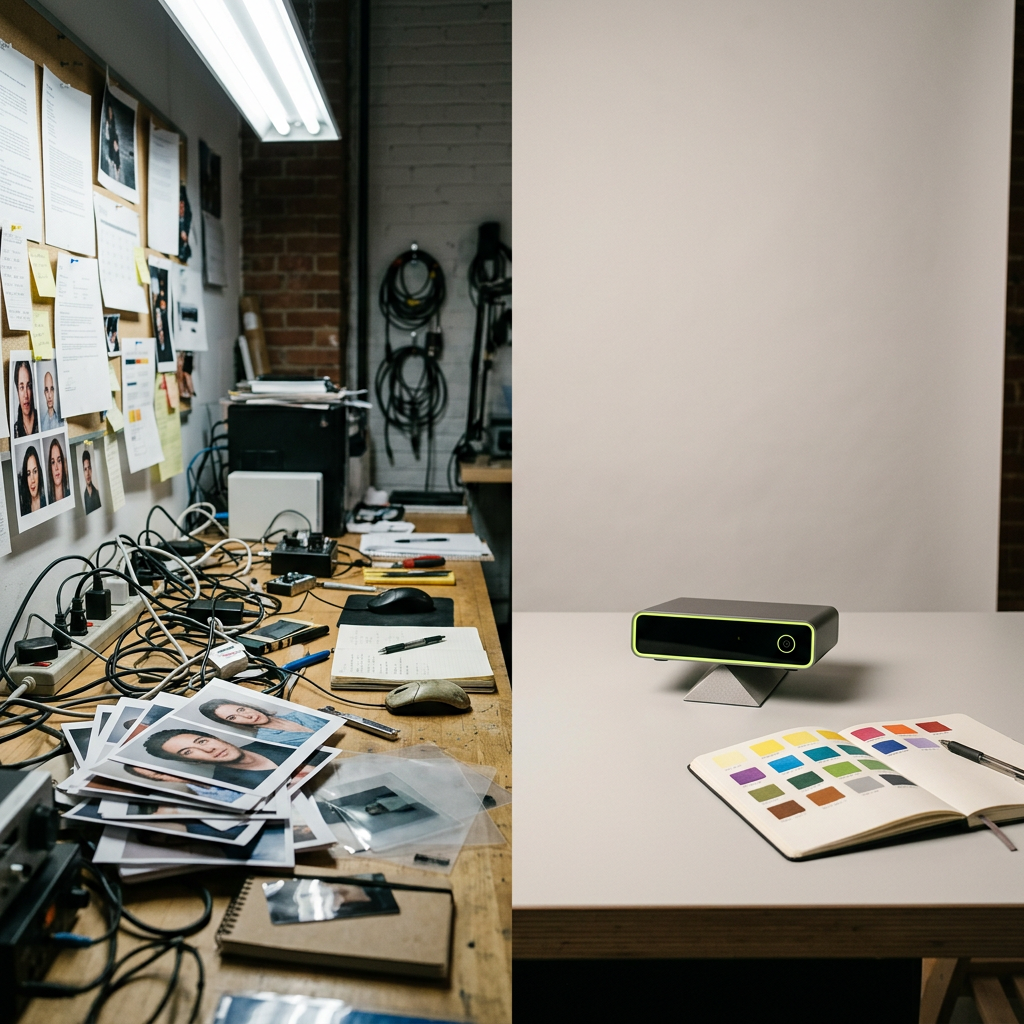
- Audit your inputs. Never upload photos of real, identifiable people without explicit rights and consent, even for internal tests.
- Know your disclosure triggers. If an ad touches social issues, elections, or politics, disclose AI use no matter how small the edit.
- Separate synthetic products from synthetic people. AI product scenes draw far less scrutiny than AI human subjects. Favor them where you can.
- Match ad claims to landing pages. AI makes aggressive hooks cheap to test. Substantiate every claim on the destination page.
- Build in review buffer. Plan for slower review on creative featuring people and launch with extra lead time.
- Vet your tool stack. Choose platforms with a documented moderation layer and no features for manipulating real people.
- Monitor account health. Track disapprovals at the account level, not just per ad, since repeated flags can trigger wider review.
Key takeaways
- The scandal centered on non-consensual manipulation tools buying ads, not on AI-generated creative in general.
- The AI info label is a transparency measure for significant edits, not a penalty or delivery suppressor.
- Social issue, election, and political ads must disclose any AI use, with no threshold.
- Scrutiny has risen most for AI-generated depictions of people, so tool choice and input hygiene matter more than before.
The bottom line
Meta's written policy didn't change overnight because of the nudify-ad reporting. Enforcement intensity and public trust did, and both now shape how your AI creative gets reviewed, labeled, and scaled. Keep your inputs clean, disclose where required, and pick tools built for compliance rather than circumvention, and you'll keep shipping fast. Skip those steps and expect to spend 2026 chasing disapprovals you didn't see coming.
Put this into practice
Generate on-brand Meta ads — angles, formats, hooks and copy — in minutes.
Start freeFrequently asked questions
No. Meta labels compliant AI-generated ad images instead of rejecting them. Rejections come from policy violations, such as deceptive claims or prohibited content, not from the use of generative AI in production.
No. Meta applies a label when generative AI is used for significant edits, such as background or image generation. For ads about social issues, elections, or politics, disclosure of any AI use is mandatory. Minor edits like resizing or color correction don't require a label.
AdGenz generates ad creative from your own brand assets and product photos inside guardrails built around Meta's Community Standards. It does not offer open-ended manipulation of images of real people, which is the capability at the center of the nudify-ad controversy.
Keep reading

Meta's AI Ad Disclosure Labels: What Advertisers Must Do Differently in 2026
Meta now expects AI info labels on ads with significant generative AI content. Here's what gets labeled, why it matters, and how to stay compliant.

Meta Ads Creative Trust Problem: Why Brands Are Wary of AI-Generated Ads (and How to Do It Right)
Why advertisers are losing confidence in Meta's native AI ad tools, and how to vet AI creative platforms for real brand safety and control.

Meta Ads Brand Safety: How to Protect Your Ad Account From AI Ad Scandals in 2026
Meta's AI moderation failures put ad accounts at risk. Here's how to audit your creative and pick AI ad tools built for brand safety in 2026.