
Meta wants every advertiser to stop uploading creative and start generating it. Muse Image, expanded Advantage+ creative, and automatic AI labeling all point at the same goal: fewer humans making ad assets, more machines making them inside Ads Manager. The pitch reads well on a keynote slide. The early results, according to advertisers actually running budget through these tools, are messier than the demos suggest.
Why Meta is doubling down on AI ad creative
Meta's incentive is structural, not cosmetic. The company earns more the more ad units it can auction and the less friction there is between "I have a product" and "I have a running campaign." Native generation collapses that friction. Muse Image takes a prompt or a product photo and returns a set of image variations without touching a design tool. Advantage+ creative already auto-generates text combinations, crops, and enhancements. The AI content labels rolling out alongside them serve transparency, and they also let Meta answer regulators before regulators ask.
None of this is Meta building a better ad agency. It's Meta building a faster on-ramp to spend. That's a reasonable business goal for them. It is not automatically a good creative strategy for you.
It helps to split what's happening under the hood into three layers, because "Meta AI ads" gets used loosely to mean all of them at once:
- Delivery automation — algorithms deciding who sees an ad, in what placement, at what bid, based on real-time signals like device, time of day, and predicted conversion probability. This layer does the actual media-buying optimization.
- In-platform creative generation — Muse Image, Advantage+ creative enhancements, automatic text and crop variations. This layer generates or alters the asset itself, inside Ads Manager, with no external tool required.
- External creative workflows — dedicated platforms used before upload to research angles, generate on-brand variants, and produce testing-ready assets across formats.
Meta has been excellent at the first layer for years. It is aggressively, sometimes clumsily, expanding into the second. The third layer is where specialized tools live, and it's the layer Meta has the least reason to perfect, because a mediocre creative generator still drives spend through the auction. For a fuller breakdown of how the 2026 creative landscape is shifting, see our Meta ad creative strategy guide for 2026.
The problem: brands report inconsistent, off-brand AI outputs
The complaints aren't coming from purists who dislike AI on principle. They're coming from performance marketers who ran Muse Image and Advantage+ creative on real budget and found the outputs unreliable in ways that cost money.
Advertiser feedback keeps landing on three issues:
- Brand drift. Native tools generate against a generic aesthetic baseline, not your guidelines. Colors shift, logo placement gets awkward, product proportions warp, and none of it matches what a brand team approved.
- Misrepresentation risk. AI-generated product imagery has shown up depicting features, packaging, or claims that don't match reality. That's a compliance problem, not just an aesthetic one.
- No testing structure. Native generation produces variations, not a testing plan. There's no systematic way to isolate whether a hook, a visual angle, or a format change drove a performance shift.
That last point matters more than it sounds. Generating five AI images is not the same as running a structured creative test. Advertiser feedback also points to uneven output quality: in reported accounts, a minority of AI-generated images (roughly 3 in 10) outperformed manually designed creative on CTR and CPA, while the rest landed at par or underperformed. That's not a reason to avoid AI generation. It's a reason to treat every AI output as unproven until it's been tested properly, which is exactly what native tools aren't built to help you do.
The point: Meta's native AI tools optimize for getting an ad live fast. They are not built to optimize for whether that ad looks like your brand or beats your control creative in a real test.
What a dedicated AI ad creative platform does differently
Specialized platforms don't compete with Meta on delivery optimization. That's Meta's job, and it does it well. They compete on the layer Meta treats as an afterthought: producing creative that's usable, on-brand, and structured for testing before it ever reaches Ads Manager.
Three differences show up consistently when you compare a purpose-built tool to native generation:
- Brand-locked generation. Instead of prompting into a generic model, you feed it your logo, palette, product shots, and past top performers, and it generates within those constraints rather than around them.
- Testing-ready variant sets. Output isn't five random images. It's a deliberate matrix: same angle across formats, same format across hooks, structured so you know exactly what you're isolating when you launch the test.
- Fatigue-aware refresh cycles. Dedicated tools assume creative decays fast on Meta's auction. They generate fresh variants on a cadence tied to performance signals, not on a one-off prompt session. If CPMs are creeping up on creative that used to perform, that's usually creative fatigue, a workflow problem native tools don't solve because they don't track it.
Tool selection matters here too. AdCreative.ai leans into scoring and rapid static generation; Creatify focuses on video-first workflows from existing footage. It's worth understanding how AdCreative.ai compares and how Creatify compares before assuming any one tool, native or third-party, fits your format mix.
Generating an ad and testing an ad are two different jobs. Meta's native tools are built for the first. Nothing is built for the second unless it was designed around it from day one.
Native AI vs. specialized AI: a practical comparison framework
The honest way to evaluate this isn't "which AI is smarter." It's which layer of the problem each tool actually solves.
| Meta's native AI tools | Dedicated AI ad creative platform |
|---|---|
| Generates against a generic visual baseline | Generates within your brand's locked colors, fonts, and logo rules |
| Produces loose variations with no test structure | Produces structured angle × format × hook matrices built for testing |
| No tracking of when creative is fatiguing | Monitors performance decay and triggers refresh cycles |
| Optimized to get spend live fast | Optimized to find and scale the winning creative variant |
| Limited compliance review before publish | Brand and claims review built into the generation step |
Native tools win on speed to launch. Specialized platforms win on speed to a proven winner.
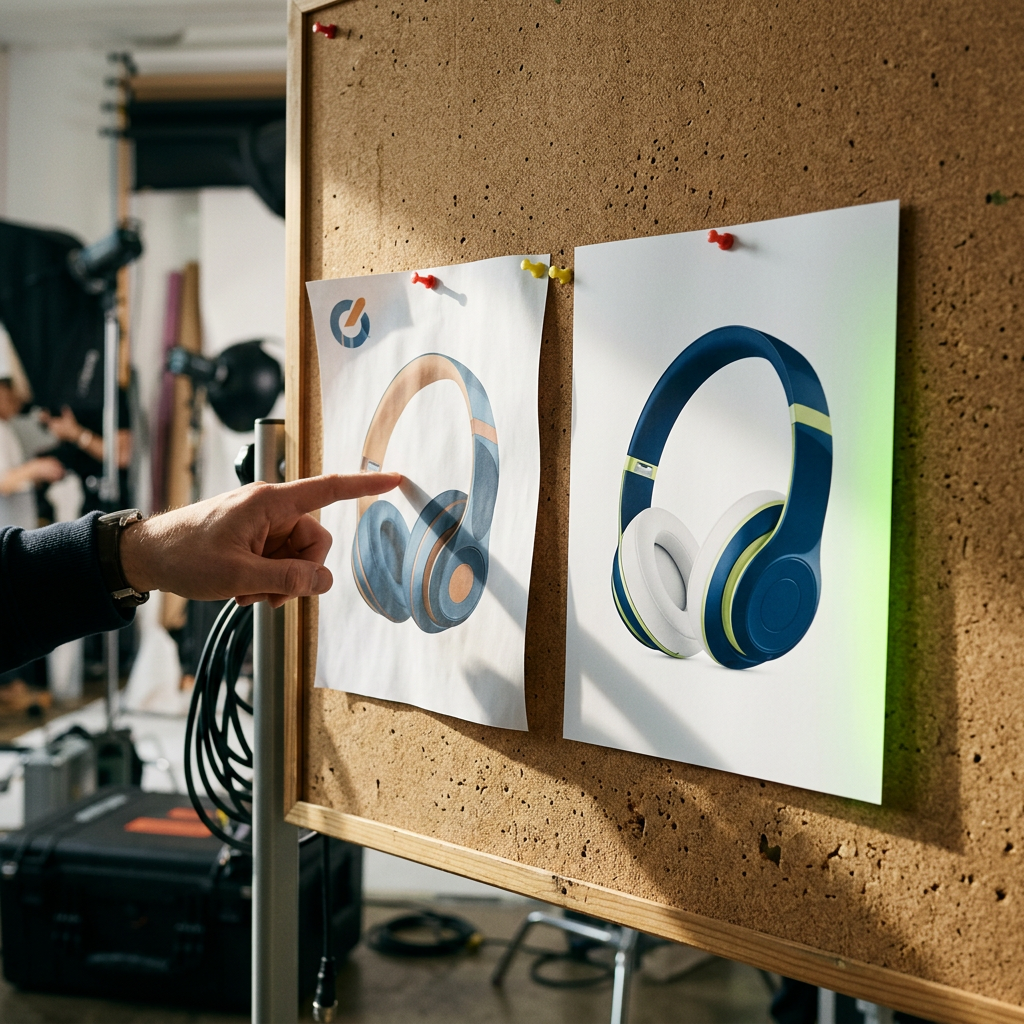
That's the structured output a dedicated platform hands you in one batch. Getting the equivalent from Muse Image means twelve separate prompts, twelve rounds of eyeballing brand fit, and no built-in way to track which combination won once the campaign is live.
When to use Meta's built-in tools vs. a purpose-built platform like AdGenz
This isn't all-or-nothing, and pretending it is leads to bad workflow choices. Each layer has a job it's genuinely good at.
Lean on Meta's native tools when:
- You're running Advantage+ campaigns and want the platform testing minor text and crop variations automatically at scale.
- You need something live in the next hour and brand precision matters less than having any creative in the auction.
- You're a small account where an off-brand asset costs little and the volume of tests you need is small.
Lean on a dedicated platform like AdGenz when:
- The creative represents the brand in a serious way: product claims, packaging accuracy, or anything with legal exposure if it's misrepresented.
- You're running structured multivariate tests and need to know which variable moved performance, not just that "some AI version" did better.
- Creative fatigue is a recurring problem and you need a refresh pipeline, not a one-time generation session.
- You're scaling across multiple formats and placements and need consistent brand execution across all of them, not just the one Muse Image happened to render well.
Most mature accounts in 2026 run both at once, for different jobs. Native AI handles the low-stakes, high-volume variation work Meta's algorithm can absorb cheaply. A specialized platform handles the assets that need to look right, test cleanly, and hold up under scrutiny.
Key takeaways
- Meta's push into Muse Image and Advantage+ creative is a media-buying strategy, not a creative strategy, and it shows in the output quality.
- Only a minority of AI-generated images beat manual creative on CTR and CPA, so every AI output still needs proper testing, native or not.
- Dedicated platforms win on brand-locked generation, testing-ready variant matrices, and fatigue-aware refresh cycles, none of which native tools are built to do.
The takeaway for 2026 planning
Meta will keep pushing native AI generation because it lowers the barrier to spend, and that's rational for a company that makes money on ad auctions. It doesn't mean the outputs are ready to represent your brand unsupervised, and early advertiser feedback says as much. The smarter move isn't picking a side. It's assigning each tool to the job it does well and routing anything brand-critical or test-critical through a platform built for that job.
Put this into practice
Generate on-brand Meta ads — angles, formats, hooks and copy — in minutes.
Start freeFrequently asked questions
Keep reading