

Performance marketers have argued about this in Slack channels for a while, and in 2026 the argument went public: if Meta's AI finds your audience better than you can, does ideal customer profile work still matter? Yes. Just not the way most media buyers were trained to use it. ICP isn't obsolete. It changed jobs, moving from the targeting tab to the creative brief.
What Advantage+ Audience Actually Optimizes For
Meta's documentation is plain about it: Advantage+ audience uses AI to find people for your campaign instead of having you define the audience by hand. You can still give it a starting point (demographics, a custom audience, a lookalike seed), but the system treats those as suggestions, not boundaries. It searches the full eligible population for people who behave like your past converters, and it will go outside your inputs if the data points there.
That is a different mechanism from the old interest stack. Manual targeting asked you to guess which interests, behaviors, and demographics correlate with buyers, then served ads only to that guess. Advantage+ watches real signal (clicks, add-to-carts, purchases, time spent) and keeps shifting delivery toward whoever converts, whether or not they match the profile you would have chosen. It doesn't care about your persona slide. It cares about outcomes.
This explains why many advertisers report Advantage+ winning on cost per result in head-to-head tests, particularly on accounts with healthy conversion volume flowing through the pixel or Conversions API. The system can learn from far more data points than any manual segmentation could encode. It also explains the complaints from low-volume and niche advertisers, including plugin and SaaS sellers in various forum threads. With too little conversion signal, the algorithm has nothing reliable to learn from, and delivery drifts toward broad guessing.
The point: Advantage+ doesn't replace targeting logic. It replaces manual targeting. The logic still has to come from somewhere, and now it comes from your creative.
Why Creative Becomes the New Targeting Lever
If the algorithm decides who sees your ad based on engagement and conversion behavior, creative is the main lever you have left for shaping that audience. A hook written for a 24-year-old first-time buyer and one written for a 45-year-old repeat purchaser will pull delivery toward different populations, even inside the same Advantage+ campaign with identical budget and placements.
We've made this argument in detail before: Advantage+ creative vs manual creative is less a debate about creative quality than a debate about signal. Every headline, visual choice, and CTA works as a targeting instruction, written in a language the algorithm reads more fluently than demographic filters.
Here's the uncomfortable part for teams whose whole workflow was built on audience segmentation. Generic creative gets you a generic audience. The system optimizes toward whoever responds, and broad appeal, loud color, or a provocative hook that doesn't fit your buyer will earn cheap clicks. You end up with a low CPM, mediocre ROAS, and a postmortem that blames "the algorithm" when the real failure was the input.

| Manual targeting era | Advantage+ era |
|---|---|
| ICP defines age, interest, location filters | ICP defines hooks, pain points, and visual language |
| Media buyer tests audience segments | Media buyer tests creative angles against one broad audience |
| Winning signal: lower CPM in a narrow segment | Winning signal: conversion quality within algorithmic delivery |
| ICP work lives in the targeting tab | ICP work lives in the creative brief |
Same research, different destination. The ICP document doesn't disappear. It gets rerouted.
Building ICP-Informed Creative Even With Broad AI Targeting
The teams doing well with Advantage+ didn't abandon ICP work. They kept doing it rigorously and stopped translating it into targeting parameters. Now it becomes creative structure. Your ideal customer profile for ads still has to answer the same questions: What specific problem does this person have? What have they already tried? What objection stops them from buying? How do they describe the pain in their own words?
What changes is where the answers go. You don't turn "25-44, interested in home fitness, lookalike of purchasers" into an audience set. You turn it into three or four distinct creative angles, each a hypothesis about a different slice of your buyer base. One speaks to the skeptic who got burned by a competitor. One speaks to the time-starved buyer who wants speed over features. One leads with social proof for the risk-averse. You're still segmenting. The segmentation just lives in the creative layer now, and the delivery engine works out which creative reaches which sub-audience.
- Re-interview your best customers, not your personas. Pull real language from support tickets, reviews, and sales calls. That becomes your hook vocabulary, not your interest list.
- Map 3-4 distinct angles to 3-4 distinct pain points. Each angle should stand alone as a reason to buy, not a reworded version of the same pitch.
- Build format variety inside each angle. A static image, a UGC-style video, and a text-heavy carousel give the algorithm different engagement patterns to learn from under one message.
- Let delivery data show which angle reaches which audience. Breakdowns by age, placement, and device often reveal an angle quietly winning with a segment you would never have targeted by hand.
The Case for Feeding Advantage+ Better Creative Inputs
Advertiser feedback on Reddit and niche forums such as hise.audio follows a recognizable pattern. Accounts with strong conversion history tend to report Advantage+ beating manual setups cleanly. Accounts with thin data or niche categories report it underperforming, sometimes delivering no conversions where manual targeting still found a few. Both groups often misread the cause, in opposite directions. Low-volume accounts blame the algorithm for not understanding their niche, when sharper creative would give it faster, cleaner signal. High-volume accounts give the algorithm all the credit, when creative variety built from real ICP research is frequently doing the heavy lifting.
Advantage+ doesn't replace strategy. It amplifies whatever strategy you give it. Vague creative becomes vague, low-intent delivery. Specific, ICP-grounded creative becomes a converting audience the system can assemble faster than a manual lookalike chain. This is where Meta Advantage+ creative settings meet the audience side. Standard enhancements, music, text overlays, and AI-generated variations all draw on the base assets you upload. A weak base asset gets multiplied into weak variations at scale. A strong one gets multiplied into strength.
Advantage+ doesn't remove the need for strategy. It removes the forgiveness for not having one.
A Framework for Briefing AI Ad Tools With ICP Data
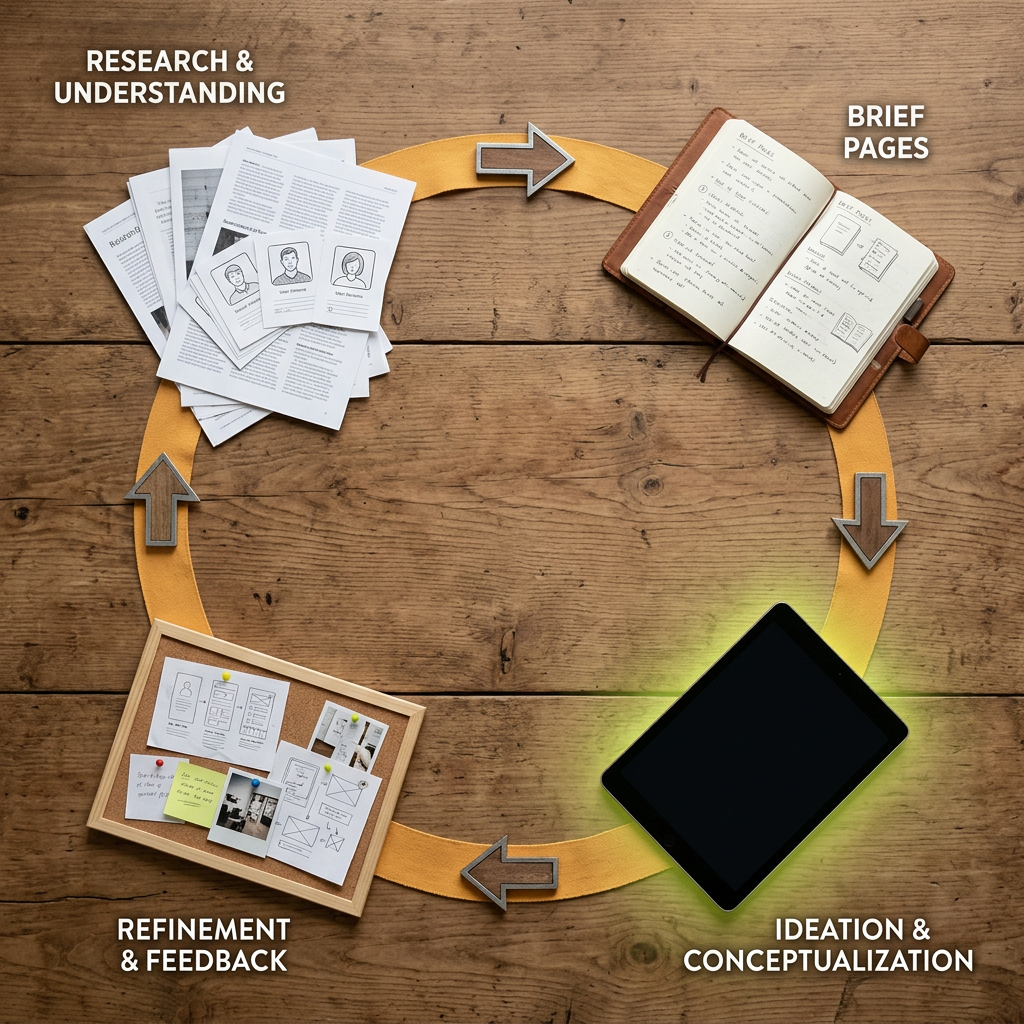
If you pair AI ad generation tools with Advantage+ campaigns, the brief you give the AI carries more weight than ever, because it is effectively writing your targeting strategy. A structure that works:
- Pain point, verbatim. Not "struggles with productivity," but the actual sentence a customer wrote in a review or support ticket.
- Objection to pre-empt. The specific doubt that stops this buyer, stated plainly enough that a hook can answer it head-on.
- Proof type this segment trusts. Data, testimonial, demo, or authority, chosen per angle rather than applied across everything.
- Tone and visual register. Polished brand visuals or raw UGC-style footage, stated explicitly so the AI doesn't fall back on generic stock aesthetics.
- Desired post-click behavior. The action that separates a real match from a curiosity click, so you judge creative on buyer intent rather than vanity engagement.
It's the same discipline we cover in ideal customer profile and Facebook ad creative, applied one step earlier, at the AI briefing stage instead of the copywriting stage. The ICP document becomes prompt architecture, not a PDF that sits in a shared drive after the kickoff call.
Key takeaways
- Advantage+ audience finds people through real engagement and conversion signal, not the filters you set. Targeting logic doesn't disappear. It moves into creative.
- Generic creative trains the algorithm toward generic, low-intent audiences, even in a technically "AI-optimized" campaign.
- ICP research should now produce angles, hooks, and objection handling for creative briefs, not interest lists and demographic ranges.
- Low-volume accounts often read Advantage+ underperformance as an algorithm problem when creative specificity is frequently the bigger factor.
Conclusion
The 2026 debate framed this as a binary: trust the algorithm or trust your audience research. It isn't one. The algorithm needs your research more than ever. It just needs it as creative instruction, not targeting configuration. Teams that write off ICP work will keep feeding Advantage+ generic inputs and watch cost per result creep up. Teams that keep doing the hard work of understanding exactly who they sell to, and turn that into sharp, specific angles, will find Meta's AI becomes the best targeting analyst they've had. The job didn't go away. It moved desks.
Put this into practice
Generate on-brand Meta ads — angles, formats, hooks and copy — in minutes.
Start freeFrequently asked questions
No, but its role is narrow. Meta recommends Advantage+ audience as the default, and many advertisers report it matching or beating manual targeting on cost per result, especially on accounts with steady conversion volume. Manual setups still have uses, such as small local budgets or niche categories with thin conversion data.
Creative briefing. The algorithm finds people based on who engages with and converts on your ads, so your ICP research should shape hooks, angles, visuals, and offer framing rather than age ranges and interest lists.
Watch cost per result over the first several days, check the demographic breakdown in Ads Manager for obvious mismatches, and compare your highest-CTR creative against its conversion rate. High CTR with weak conversions usually means the system is finding attention rather than buyers, and the cause is more often vague creative than audience failure.
Keep reading
Meta Ad Exclusion Audiences: What They Are and How to Use Them for Better Creative Targeting
Meta's exclusion audiences aren't just a targeting fix. They change what creative you need to build for the people left in your pool.

Meta Advantage+ Creative Explained: What Each Toggle Actually Does to Your Ad (2026)
A plain-English breakdown of the Advantage+ creative enhancements: what each one changes, and which ones to audit or switch off before your next launch.
Advantage+ Audience vs Manual Targeting: How to Combine Them with Strong Creative
Advantage+ audience moves the real targeting work into your creative. Here's how to combine automation and manual control without losing performance.