
Most Facebook ad campaigns that underperform share a common root cause. It is not a weak offer. It is not a stingy budget. It is not even poor targeting. The creative itself is speaking to nobody in particular, built on assumptions instead of real customer intelligence. When you fix that, everything else gets easier.
Your Ideal Customer Profile is the most underused asset in the creative production process. Marketers spend weeks refining their ICP for positioning decks and sales scripts, then hand a designer a vague brief that says something like "make it feel premium" and wonder why the ads do not convert. This guide is about closing that gap, specifically showing you how to translate ICP attributes into creative briefs, hook angles, copy variations, and a modular testing system that compounds over time.
Why Most Facebook Ad Creatives Fail at the Audience Level, Not the Design Level
A well-designed ad that speaks to the wrong fear, the wrong aspiration, or the wrong moment in the customer journey is still a bad ad. Design execution gets blamed because it is visible. Audience misalignment is invisible until you look at your frequency, thumb-stop rate, and cost-per-result together.
The pattern is consistent. A brand identifies a broad audience segment, writes copy around generic benefits, and produces visuals that could belong to any competitor in the category. The ad runs. CTR is mediocre. The team iterates on colors and button text instead of questioning whether the core message reflects what the target customer actually cares about.
Real creative resonance comes from specificity. When someone scrolling their feed sees an ad that names their exact frustration, in language they would use themselves, they stop. That specificity only comes from a well-built ICP, and it only makes it into the ad if someone deliberately translates it during the briefing process.
Before you produce a single asset, read through how to build an ideal customer profile for ads to make sure your ICP is grounded in behavioral and attitudinal data, not just firmographics or demographics.
What Your ICP Brief Needs to Include Before You Touch a Creative Tool
A creative brief that starts with "our target audience is women aged 25-45 who like fitness" is not a brief. It is a targeting parameter. The brief needs to go several layers deeper before it becomes useful to a designer, copywriter, or AI creative tool.
Here is what a complete ICP-informed creative brief must include:
- Primary pain point in the customer's own words. Not "inefficiency" but "I spend three hours every Sunday night doing what should take twenty minutes."
- Aspiration or desired outcome. Not "save time" but "get to Sunday dinner without thinking about work once."
- Top objection or purchase barrier. The specific reason they hesitate, whether that is price, trust, complexity, or fear of switching costs.
- Trigger moment. What happened in their life or business that made them start looking for a solution? This is your hook territory.
- Vocabulary list. Exact phrases pulled from reviews, support tickets, sales calls, or community forums. These words belong in your headlines and body copy verbatim.
- Competing alternatives. What they are currently using or considering, because your ad needs to implicitly or explicitly position against those options.
- Emotional context. Are they frustrated, overwhelmed, skeptical, excited? The tone of your creative should match their emotional state, not your brand's preferred mood.
With these seven elements documented, a designer or copywriter has everything they need to make deliberate creative decisions rather than aesthetic ones.
Mapping ICP Pain Points to Ad Angles: A Practical Framework
Pain points do not automatically become ad angles. You need to translate them. The translation step is where most briefs fall short, because it requires a layer of strategic thinking between the research and the creative execution.
A useful framework maps each pain point to one of four angle types:
Problem-Agitation Angle
Lead with the pain. Name it precisely, then amplify the cost of not solving it. This works best for audiences who are aware they have a problem but have not yet committed to solving it. Example: if your ICP says customers hate reconciling expenses manually, your angle is not "easier expense tracking." It is "your finance team is spending twelve hours a month on something that should take forty minutes."
Aspiration Angle
Lead with the outcome. Show the life or business after the problem is solved. This works for audiences who are solution-aware and motivated. The risk is being too vague. Anchor the aspiration to a specific, concrete result rather than an emotional abstraction.
Objection-First Angle
Open by naming the objection directly. "You've probably tried three tools like this and none of them stuck." This disarms skepticism immediately and signals that you understand their experience. It is particularly effective for retargeting audiences who have already visited your site or engaged with previous ads.
Social Proof Angle
Lead with a customer result that mirrors your ICP's situation. The more specific the proof point, the better. "A 12-person agency cut their reporting time by 60% in the first month" outperforms "thousands of happy customers" every time.
Turning Customer Language Into Hooks, Headlines, and Body Copy
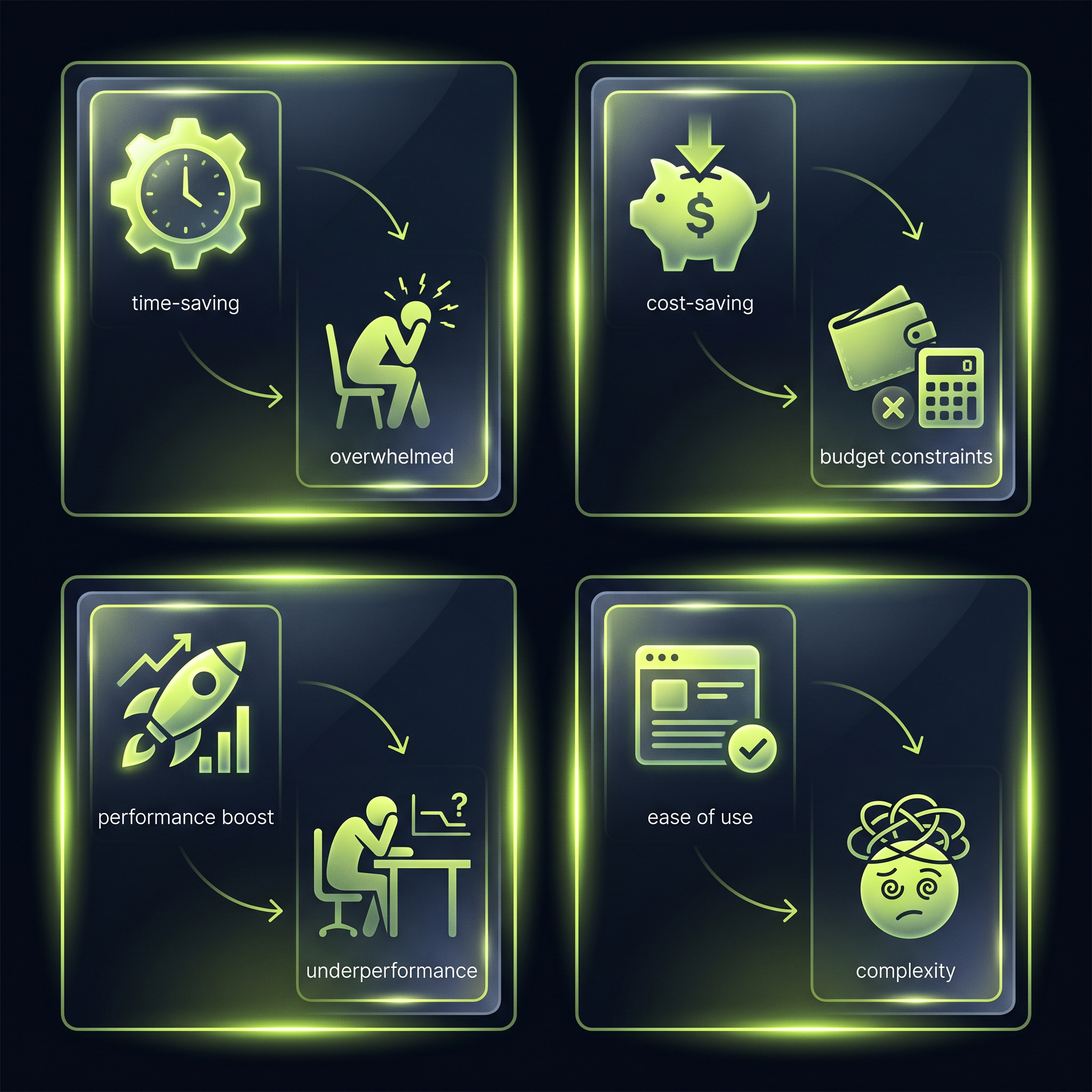
The single highest-leverage thing you can do with your ICP data is mine it for exact customer language and put that language directly into your ad copy. Not paraphrased. Not cleaned up. Verbatim, or as close to it as possible.
Sources for raw customer language include: one-star and five-star reviews on your product or competitors, sales call transcripts, customer support tickets, community forums and subreddits, post-purchase survey responses, and social media comments on relevant content.
When you collect this language, look for recurring phrases. If three different customers describe the same frustration using the same unusual word, that word belongs in your hook. Specificity signals authenticity, and authenticity earns attention on a feed full of polished brand messaging.
For hooks specifically, the goal is pattern interruption followed by immediate relevance. The reader needs to feel, within the first two seconds, that this ad was made for them. Detailed guidance on constructing high-performing hooks is covered in this breakdown of Facebook ad hooks, but the ICP layer is what makes any hook formula actually land with your specific audience.
For body copy, structure your argument around the objection sequence your ICP reveals. State the pain, validate the frustration, introduce the mechanism, prove it works, remove the risk, and call to action. The order matters because it mirrors the internal monologue of a skeptical buyer. Full copywriting structure options are laid out in these Facebook ad copywriting frameworks.
How to Brief a Designer or AI Tool Using Your ICP Data
The brief you hand to a designer or an AI creative tool determines the ceiling of what comes back. Garbage in, generic out. Your ICP data needs to be translated into specific creative direction, not left as raw research for someone else to interpret.
For a human designer, the brief should specify: the emotional state of the viewer when they encounter this ad, the one thing they should feel after seeing it, the visual scenario that represents their current pain or desired outcome, and any language or phrases that must appear in the creative. Tell the designer who this person is as a human, not just as a demographic.
For AI creative tools, the same principle applies with additional precision. Tools like AdGenz.ai generate ad creatives from structured inputs, and the quality of output scales directly with the specificity of your ICP inputs. When evaluating options, it is worth reviewing how AdGenz.ai compares to AdCreative.ai in terms of how each platform handles audience-specific creative generation.
A practical briefing checklist for any creative tool:
- State the specific ICP segment this creative targets.
- Provide the primary pain point in the customer's own words.
- State the one outcome the viewer should want after seeing the ad.
- List the top objection this creative needs to address or sidestep.
- Specify the angle type (problem, aspiration, objection, proof).
- Include three to five vocabulary words or phrases pulled from customer research.
- Define the CTA and what action you want them to take next.
ICP Segments to Creative Variations: Building a Modular Creative System
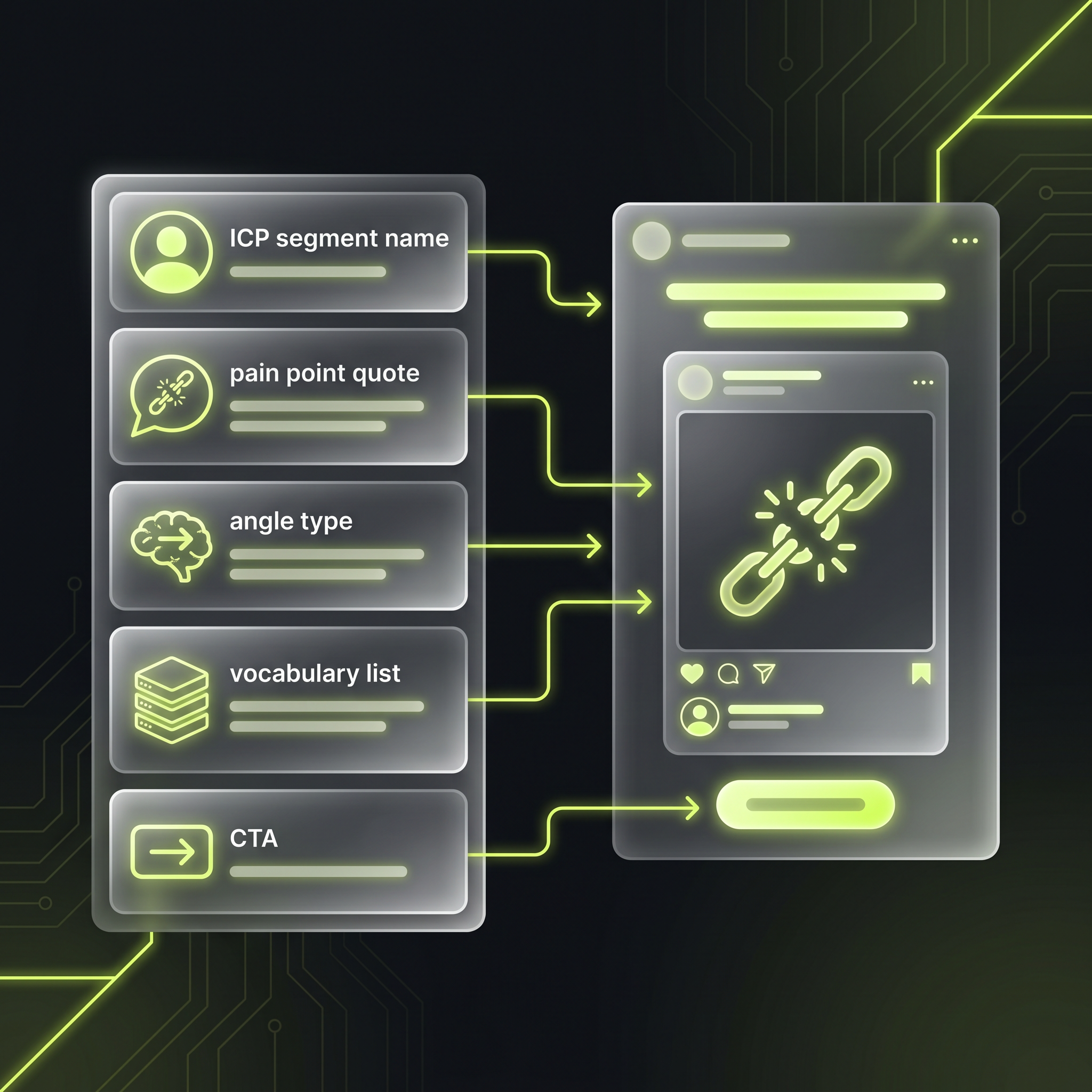
If your ICP has more than one distinct segment, your creative system needs to reflect that. A modular approach lets you build a core creative structure once and swap out the segment-specific elements, rather than starting from scratch for every audience.
The modular elements that change by segment are: the hook (because different segments have different trigger moments), the pain point called out in the first line of body copy, the proof point or testimonial used, and sometimes the visual scenario. The structural elements that stay consistent are: the offer, the CTA, the brand voice, and the visual format.
For example, a project management tool might have three ICP segments: agency owners frustrated by client communication chaos, in-house marketing managers overwhelmed by cross-team dependencies, and freelancers struggling with scope creep. The offer is the same. The hook, the pain language, and the social proof rotate by segment. This gives you nine to twelve distinct creatives from three core briefs, and each one feels tailor-made for its audience.
Run these segment-specific variations in separate ad sets so performance data stays clean. You need to know which segment is responding, not just which creative is winning in a mixed pool.
Validating ICP-Driven Creatives: What Good Performance Signals Look Like
When your ICP-to-creative translation is working, you will see it in specific metrics before you see it in ROAS. The first signal is thumb-stop rate, which Facebook reports as a three-second video view rate for video or as hook engagement for static ads. If your hook is landing with the right audience, this number moves first.
The second signal is comment quality. ICP-aligned creatives generate comments that say things like "this is literally me" or "how did you know." Generic creatives generate silence or price objections. Read your comments, they are qualitative validation data.
The third signal is the gap between CTR and conversion rate. A high CTR with a low conversion rate usually means the ad is attracting the wrong segment, your creative is resonating with someone, just not your ICP. A lower CTR with a strong conversion rate often means your creative is correctly filtering for high-intent buyers. Both situations tell you something about ICP-to-creative alignment.
Iterate on the angle before you iterate on the design. If the problem-agitation angle is underperforming against your aspiration angle for a given segment, that is an insight about where that segment is in their awareness journey, not a signal to change your color palette.
ICP Creative Brief Template
Use this template as the starting point for every creative brief. Fill it out before briefing any designer, copywriter, or AI tool. The discipline of completing every field is what separates intentional creative production from guesswork.
- Segment name: What you call this ICP internally.
- One-sentence description: Who they are and what they do.
- Primary pain point (in their words): Direct quote or close paraphrase from customer research.
- Trigger moment: What event prompted them to start looking for a solution.
- Desired outcome: Specific, concrete result they want.
- Top objection: The single biggest reason they might not buy.
- Angle type: Problem / Aspiration / Objection-first / Social proof.
- Hook draft: First line of the ad, written to stop this specific person.
- Vocabulary words: Three to five exact phrases from customer research to use in copy.
- Proof point: Specific result from a customer who matches this segment.
- Visual direction: The scenario, emotion, or moment the visual should depict.
- CTA: Exact call to action and the next step it leads to.
- Format: Static, video, carousel, or UGC-style.
Copy this template into your project management tool or brief document. Require it for every new creative batch. Over time, the completed briefs become a library of ICP intelligence that makes each subsequent round of creative production faster and more precise.
The marketers who consistently produce high-performing Facebook ad creatives are not the ones with the best designers or the biggest budgets. They are the ones who do the hard thinking about their audience before anything gets made, and then communicate that thinking clearly to whoever is building the assets. Your ICP is the source of that thinking. This process is how you get it into the work.
Put this into practice
Generate on-brand Meta ads — angles, formats, hooks and copy — in minutes.
Start freeFrequently asked questions
Keep reading