
On July 7, 2026, Meta Superintelligence Labs shipped Muse Image, its first in-house image generation model, straight into the Meta AI app, WhatsApp, Instagram Stories, and Ads Manager. For years, Meta's generative ad tools leaned on outside models from Midjourney and Black Forest Labs bolted onto Advantage+ Creative. That dependency is over. Muse Image is Meta's own model, trained on Meta's own infrastructure, and it's the second major release from the Alexandr Wang-led lab after April's Muse Spark language model. If you buy media on Meta, this is worth understanding properly, not as a headline but as a shift in what "free" creative generation inside Ads Manager can actually do for your account.
What Is Muse Image and Why Meta Built It
Muse Image is a first-party image generation model built by Meta Superintelligence Labs, the research group Mark Zuckerberg assembled after the reported $14 billion Scale AI deal brought Alexandr Wang in-house. Before Muse Image, Meta's image features, whether in the consumer Meta AI app or in advertiser tools like background generation and image expansion, ran quietly on licensed third-party models. That worked for a demo. It also meant Meta was renting the core technology behind one of its most strategically important product categories: ad creative.
Muse Image changes that. Meta now owns the model, the training pipeline, and the roadmap. That means faster iteration and tighter integration with the rest of the ads stack, including targeting signals and, eventually, performance feedback loops a licensed vendor could never touch. Muse Video, its companion model, launched alongside it for motion generation. CNBC's coverage framed the launch plainly: Meta is trying to keep both creators and advertisers inside its ecosystem rather than exporting creative work to Midjourney, Canva, or specialized ad-creative platforms.
The consumer rollout is free through the Meta AI app, WhatsApp DMs, and Instagram Stories. Power users and creators get routed toward new paid tiers for higher-volume or priority generation, a monetization layer Meta had been testing since May. For advertisers, the rollout that matters is the one inside Ads Manager, where Muse Image slots into the existing Advantage+ Creative tools.
How Muse Image Differs From Meta's Previous AI Ad Tools
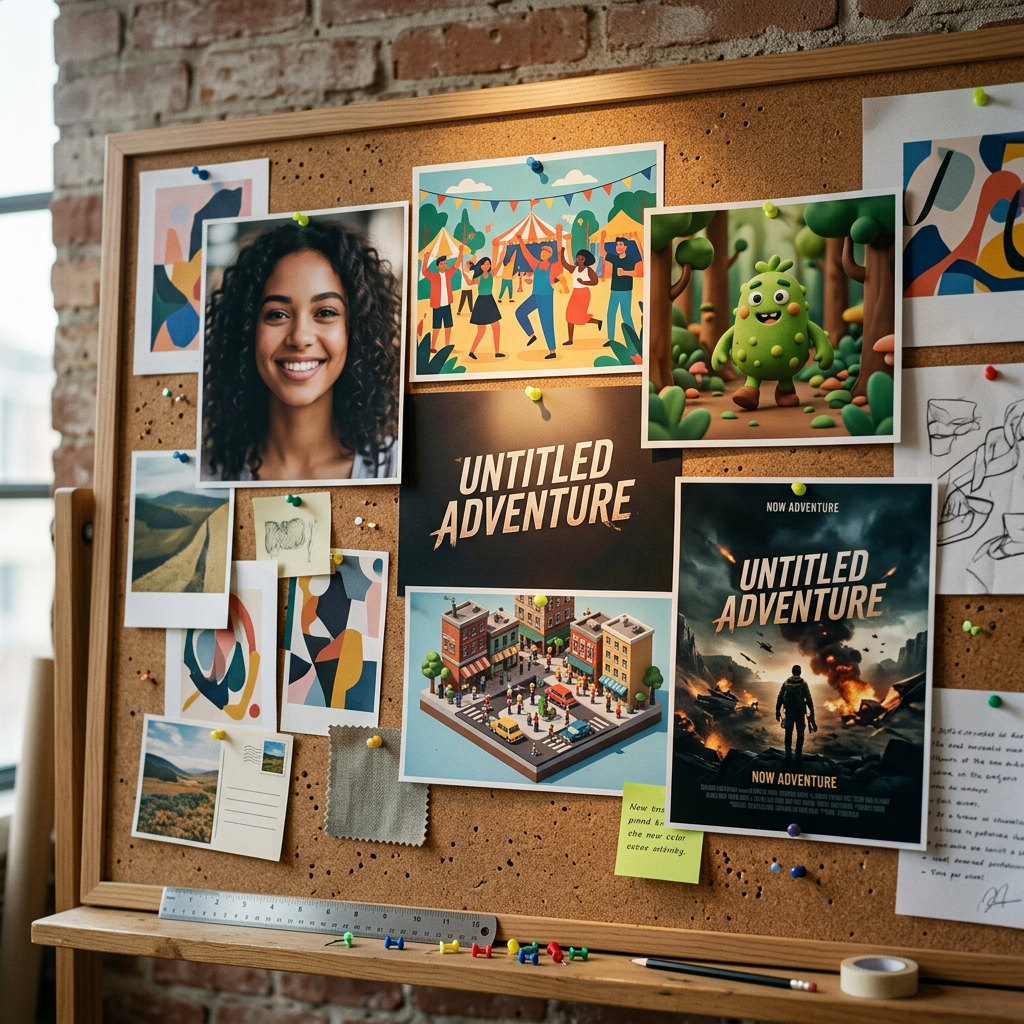
The first difference an advertiser will notice is quality and stylistic range. Meta's launch materials show the model handling an unusually wide creative register in one pass: photoreal portrait work, flat 2D illustration, claymation, 16-bit game sprite style, isometric low-poly assets, movie poster compositions, and product-style stills. Advantage+ Creative's earlier background-swap and image-expansion features were narrow tools for narrow problems. Extend this background, remove this object, generate a variant of this crop. Muse Image is a general-purpose engine wired into ad surfaces, not a single-purpose ad utility.
The second difference is ownership of the feedback loop. A licensed third-party model sits behind an API wall. Meta can't retrain it on ad-specific signals, can't fine-tune it against click-through data at the account level, and can't ship updates on its own schedule. An in-house model removes that wall. Over the next 12 to 18 months, expect Meta to tune Muse Image's ad-facing variant against engagement and conversion signals the way it already tunes ranking and targeting models. That's the strategic reason this launch matters more than a typical feature update.
What This Means for Ad Creative Production Speed
For small and mid-size advertisers who have been hand-building static creative in Canva or paying freelancers for basic product photography variants, Muse Image inside Ads Manager removes a real bottleneck. Generating a dozen stylistic variants of a product shot, or reskinning a lifestyle image for a different season or region, now takes minutes instead of a day-long design-request turnaround. That matters most for accounts running Advantage+ Shopping campaigns that need constant creative refresh to fight fatigue.
It also lowers the floor for testing volume in a literal sense: you can produce more raw assets per week without adding headcount. But raw asset volume and structured testing volume are not the same thing. Producing 40 images in an afternoon is only useful if those 40 images are organized around distinct hooks, angles, and hypotheses rather than 40 cosmetic variations of one idea. This is where a lot of advertisers will overestimate what native generation buys them.
The point: Muse Image solves a production speed problem. It does not solve a creative strategy problem. Faster generation of the wrong ten variants is still ten wrong variants, just delivered sooner.
Used correctly, native generation is a supply tool that feeds a testing framework, not a replacement for one. If you haven't formalized how you structure hooks, angles, and formats before testing, that groundwork matters more now, because the cost of producing each variant just dropped toward zero. Our Facebook ad creative testing framework for 2026 lays out how to build that structure so cheap generation turns into compounding learnings rather than noise.
Limitations to Know Before You Rely on It
A few things are worth being clear-eyed about before you restructure your creative workflow around Muse Image.
- Brand consistency is still fragile. General-purpose image models are good at range, not at holding a precise brand system, exact product SKUs, or packaging accuracy across dozens of generations without manual correction.
- No native testing infrastructure. Muse Image generates assets. It doesn't tag them by hook or angle, doesn't structure a testing matrix, and doesn't feed performance data back into your next batch.
- Rollout is uneven. Like most Meta launches, expect account-level and regional staggering, plus a paid tier for higher-volume or priority use that free-tier accounts won't get.
- It's optimized for Meta, not portability. Assets are built for Meta's placements and aspect ratios first. If you also run TikTok, Google Demand Gen, or programmatic display, you'll still need a cross-platform creative pipeline.
| The old way | The better way |
|---|---|
| Wait days for a designer to produce 5 static variants | Generate 30-40 raw variants in Ads Manager in an afternoon |
| Test creative changes with no hook/angle framework | Feed native generation into a structured testing matrix by hook, angle, and format |
| Rely on one AI vendor with no performance feedback loop | Combine first-party generation with a platform that tracks which angles actually convert |
Muse Image raises the ceiling on production speed; testing discipline still determines what you do with it.
How to Combine Native Generation With Dedicated Creative Testing
The workflow that works right now looks like this: use Muse Image for rapid first-pass generation of visual variants, then route those variants into a testing system that tracks hook, angle, and format performance separately. That way you know which combinations are earning their spend, not just which ones look good in a mockup.
This is the same logic behind why a decision matrix approach to creative planning still matters even when generation is instant. Mapping angles against formats against hooks gives you a defensible reason for producing each asset, rather than generating variety for its own sake.
Twelve deliberately structured assets, generated fast with Muse Image and organized against a matrix like this, will usually outperform forty randomly-styled variants. The generation speed is the input. The matrix is what turns the output into usable data instead of clutter.
If you're rethinking how creative fits into your broader Meta strategy for the year, read our full breakdown of Meta ad creative strategy for 2026, which covers how Advantage+ campaign structures interact with creative refresh cadence.
Where Purpose-Built Ad Creative AI Still Outperforms Native Tools
Meta building its own image model is a genuine leap for anyone doing basic static creative inside Ads Manager. But "native and free" is not the same as "complete creative operating system." A few gaps remain where dedicated ad creative platforms still earn their fee.
Native tools generate. They don't organize your creative library by angle and hook, they don't auto-generate ad copy variants matched to each visual concept, and they don't give you a UGC-style video pipeline for the placements where static images underperform. Tools like Creatify are built specifically to turn a product link or asset into UGC-style video ad variants at volume, a different job entirely from Muse Image's general-purpose image generation.
Similarly, platforms compared in our AdCreative.io comparison are built around scoring and predicting creative performance before spend, something a general image model has no concept of. Muse Image doesn't know whether an image will convert. It knows how to render what you ask for. The scoring, the testing structure, and the performance prediction layer remain a separate and still necessary part of the stack.
Key takeaways
- Muse Image is Meta's first in-house image model, replacing third-party Midjourney/Black Forest Labs integrations in Ads Manager's Advantage+ Creative tools.
- It meaningfully speeds up raw creative production but includes no built-in testing structure, brand consistency guardrails, or cross-platform portability.
- The winning approach pairs fast native generation with a structured hook/angle/format testing matrix and a dedicated tool for scoring and scaling what actually converts.
Generation speed was never the bottleneck that determined ad performance. Knowing which twelve assets to make was.
The Practical Verdict for 2026
Muse Image is a real upgrade, not a marketing repackage of the generative features Meta shipped in prior years. Owning the model outright lets Meta move faster on quality and eventually tune generation against actual ad performance signals in ways no licensed vendor relationship allowed. For advertisers, that's good news on raw production speed and cost. It is not, on its own, a testing strategy, a brand system, or a performance prediction engine. Treat it as what it is: a faster, better first-pass generator that needs a disciplined testing process behind it to move return on ad spend. The teams that win in 2026 will use Muse Image to produce more raw material, faster, while still relying on structured frameworks and dedicated tools to decide what's actually worth scaling.
Put this into practice
Generate on-brand Meta ads — angles, formats, hooks and copy — in minutes.
Start freeFrequently asked questions
No. Meta's earlier generative features in Advantage+ Creative leaned on third-party models like Midjourney and Black Forest Labs. Muse Image is Meta Superintelligence Labs' own first-party image model, built and trained in-house and now integrated directly into Ads Manager and Meta AI surfaces.
It can replace some manual production work, especially background swaps, resizing, and style variants, but it doesn't run structured hook-angle-format testing matrices or pull performance data back into the generation loop the way purpose-built platforms do.
Basic generation is rolling out free inside Ads Manager and the Meta AI app, but Meta has also introduced paid subscription tiers aimed at power users and creators who need higher volume or priority access.
Keep reading
How to Build a Meta Ads Creative Testing Calendar (Weekly & Monthly Templates)
A plug-and-play weekly and monthly Meta ads creative testing calendar with volume benchmarks, fatigue triggers, and AI-assisted production workflows.
Meta Muse Image AI: What Advertisers Need to Know
Meta's Muse Image is rolling into Advantage+. Here's what it does, where it falls short on brand consistency, and when to reach for a dedicated ad creative tool instead.
Vertical Video Ads on Facebook: Meta's Best Practices vs. What Actually Converts
Meta's official specs meet real performance data: what actually makes vertical video ads convert on Feed, Reels, and Stories.