

Most ideal customer profiles die the same death. A marketer spends two days interviewing sales reps, pulls firmographic data from the CRM, builds a tidy one-pager with a fake name like "Marketing Mary," and files it in Notion. Six months later nobody remembers it exists, and the ad account is still running the same three broad hooks it launched with. The ICP was accurate. It just never touched a single ad.
Why Most ICPs Stay in a Spreadsheet and Never Reach Your Ads
Salesforce's State of Sales research found that 86% of business buyers are more likely to buy when they feel their goals are understood. The problem is not that marketers disagree with this. It's that the document meant to capture "understanding the customer" gets built by one team, in one format, for one purpose, and rarely makes it into the brief a copywriter or creative team actually works from.
HubSpot's own early growth story is the cautionary version at scale. In 2012 the company ran with two ideal customers at once: a solo operator with fewer than ten employees, and a marketing manager inside a thousand-person company. Different pricing needs, different support needs, different everything. CEO Brian Halligan later described the cost of never choosing as an "invisible optionality tax." Ad accounts pay the same tax every day, in the form of vague creative that tries to speak to everyone and lands with no one. If you haven't nailed down the foundational profile yet, our guide on building an ideal customer profile for ads walks through that first layer before you get to creative execution.
The fix isn't a better template. It's changing what an ICP is allowed to contain, and where it lives.
| The old way | The better way |
|---|---|
| Demographic persona: age, income, job title | Job-to-be-done plus the exact pain language pulled from real customers |
| One generic angle run across the whole account | 3 to 5 ICP-mapped angles tested against each other |
| Copy written from the brand's point of view | Headlines and hooks written in the customer's own words |
Same customer, dramatically different creative output.
The Five ICP Data Points That Change Ad Creative Immediately
Not every field in a typical ICP earns its keep in a creative brief. These five do, because each one maps to a specific creative decision you'll make in the next hour, not a strategic one you'll revisit next quarter.
- The primary job-to-be-done. The outcome they're actually hiring your product to deliver, not the category label you'd put on a shelf. This becomes the promise your hook has to hit within the first two seconds.
- The top objection. The single thing stopping them from clicking "buy" today, whether that's price, past disappointment, or trust. This becomes the objection you preempt in your second or third frame.
- Verbatim language. The exact phrase they'd type into a search bar or say to a friend describing the problem. This becomes your headline, word for word, wherever possible.
- The trigger event. What just happened that made this problem urgent right now: a diagnosis, a new job, a failed attempt with a competitor. This becomes your scroll-stopping open.
- The current alternative. The workaround, competitor, or version of "doing nothing" they're comparing you against. This shapes the contrast you build into your body copy and visuals.
An ICP that doesn't capture the exact sentence your customer says to a friend about their problem isn't finished. It's a draft.
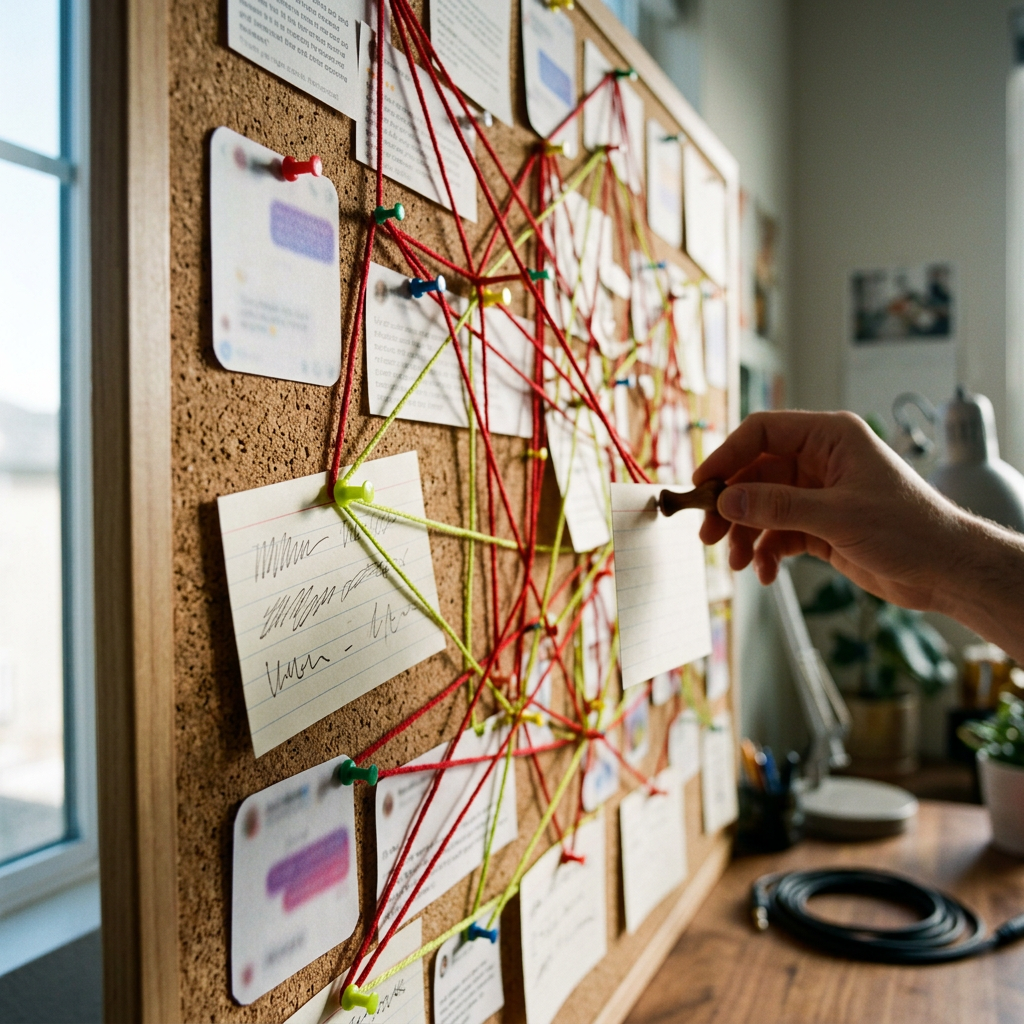
Mining Customer Language: Reviews, DMs & Reddit as Creative Briefs
You don't need a research budget to get verbatim language. You need thirty focused minutes in three places.
Reviews. Pull your own product reviews and, more valuably, reviews left on the competitor or category you're up against. Search within them for phrases like "wish it did," "finally," "I was skeptical," and "the only thing that worked." These are pre-tested headlines. Someone already used them under emotional conditions, unprompted.
Support tickets and DMs. Customer service transcripts are one of the most underused creative assets in most ad accounts. The way a frustrated customer describes their problem to a support agent is almost always sharper and more specific than anything a copywriter would invent from a brief.
Reddit and niche communities. Search your category plus "reddit" and read threads where people ask for recommendations or vent about a category-wide failure. The top comment, the one with the most upvotes, is usually the clearest articulation of the exact pain your ICP feels. Screenshot it. Keep a running swipe file organized by pain point, not by source.
Translating Pain Points into Scroll-Stopping Hooks
Once you have a pain point in the customer's own words, the translation into a hook is mechanical, not mysterious. A pain point stated flatly, "my skin gets oily by noon," becomes a hook when you add specificity and a moment: "If your face looks shiny before lunch, this is why." Same information, restructured as recognition rather than description. For a deeper breakdown of hook structures that work specifically on Meta, our piece on Facebook ad hooks covers the formats worth testing first.
The point: the best hook is a pain point stated back to the customer in their own words, not your brand's marketing vocabulary.
Mapping ICP Desires to Visual Style, Talent & Scene Choices
The same ICP research that writes your hooks should also cast your ad. If your trigger event is "just diagnosed with a condition," the talent, setting, and pacing need to reflect someone in that emotional state, not a glossy studio shot with upbeat music. If your ICP's current alternative is a cheaper competitor, your visual contrast should show a tangible difference, not lifestyle aspiration. Match talent age, setting, and wardrobe to how your ICP actually sees themselves, not how the brand wishes they looked.
This is where a single ICP, split into two or three distinct angles, earns its keep as a real testing matrix rather than a single ad.
Put this into practice
Generate on-brand Meta ads — angles, formats, hooks and copy — in minutes.
Start freeFrequently asked questions
A persona is usually a static, demographic sketch. An ICP built for creative includes verbatim customer language, objections, and trigger events, the raw material a copywriter or AI tool actually needs to write a hook.
Treat it as a living document. Any time CAC climbs for two consecutive weeks, a new segment starts converting, or reviews shift in tone, pull fresh quotes and re-brief your creative within the same week.
Yes. Reviews, support tickets, DMs, and niche subreddits are free and often richer than formal surveys. Thirty minutes of reading real customer language beats a generic persona template every time.
Keep reading

How to Build an Ideal Customer Profile from Your Meta Ads Data (Not Guesswork)
A reverse-engineering tutorial for mining Ads Manager breakdowns, comments, and purchase data to build a real ICP, not a hypothetical one.

Ad Copy Frameworks by Funnel Stage: AIDA, PAS, and 4Ps Compared
A side-by-side comparison of AIDA, PAS, and 4Ps for Meta ads, with a decision table for matching framework to funnel stage and offer.

Creative Testing Variables: What to Change Between Ad Versions (Hook, Angle, Format, Offer)
A variable-isolation framework for Facebook ad testing: what to change between ad versions, how to sequence tests, and how to read the results.