Plenty of Facebook ad accounts have a "winner" running right now that isn't a winner at all. It picked up a few cheap conversions in a noisy three-day window, got crowned champion, and has been eating budget ever since. The "losers" it beat were never worse. They were unlucky. This is one of the most expensive mistakes in paid social creative testing, and it has nothing to do with creative quality. It's a methodology problem.
This guide skips the "how many ads should I test" question (we cover that in detail here) and goes straight to the part few people write about: running a test so the result actually means something. That covers sample size thresholds, clean variable isolation, and a clear process for what happens after you call a winner.
Why most Facebook ad A/B tests give you false winners
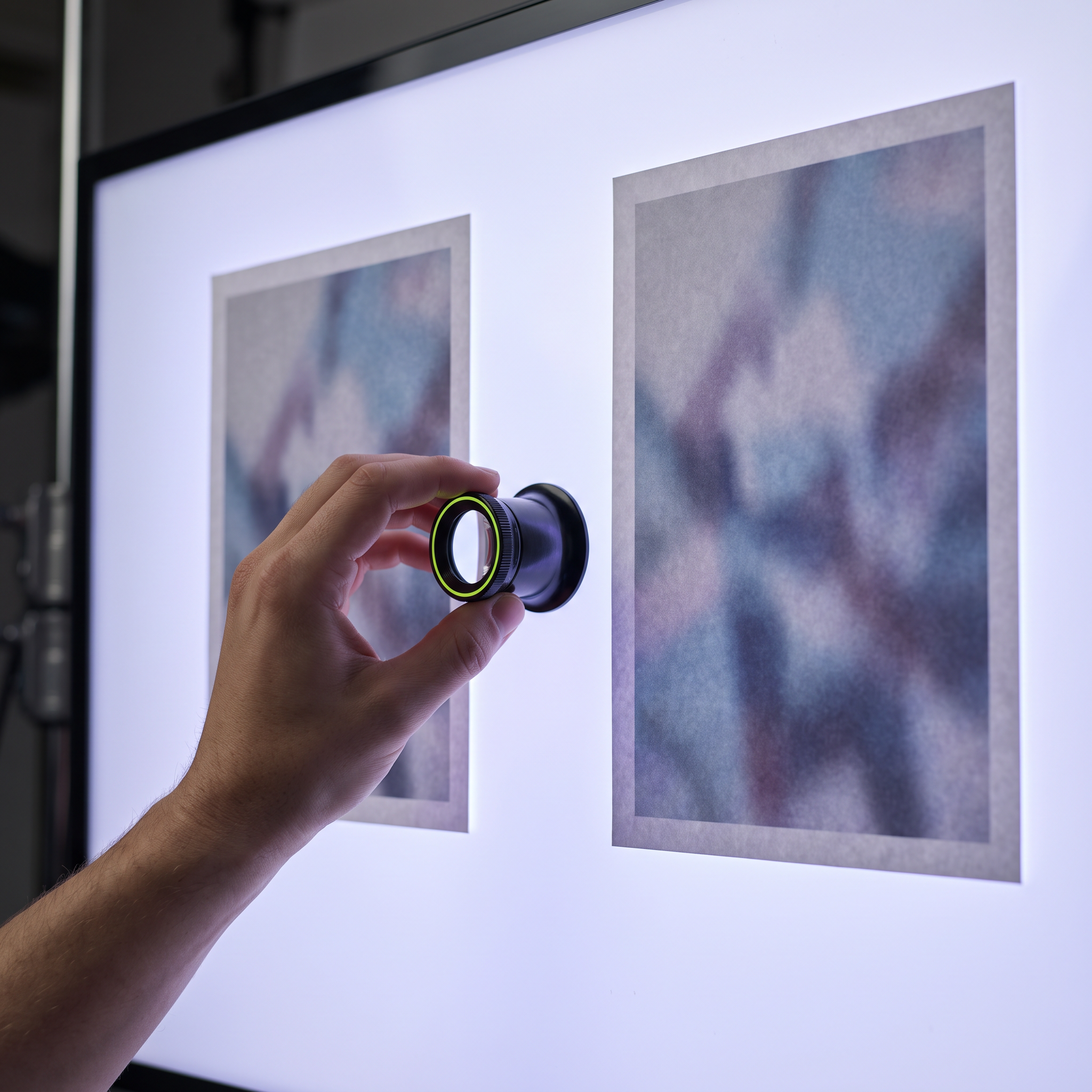
A false winner is random variance mistaken for a real performance gap. Meta's auction, audience behavior, and daily spend swings all add noise. If Ad A has 8 conversions and Ad B has 5, you don't have a winner. You have a coin that landed heads a few more times than tails. Keep flipping and the gap often closes or reverses.
Three habits produce most false winners:
- Calling it too early. Reading results after 36 hours, while delivery is still in the learning phase and spend is uneven between arms.
- Treating a proxy metric as the goal. Higher CTR or a better thumb-stop doesn't guarantee more purchases. Hook performance and bottom-funnel performance regularly diverge.
- Changing more than one thing. Swap the hook and the offer in the same test and a win can't tell you which change did the work.
Meta's own documentation describes A/B testing as showing each version to a separate, non-overlapping segment of your audience and comparing outcomes. That comparison only becomes meaningful once the sample is large enough that chance is no longer the most likely explanation.
The point: a cheaper CPA over one weekend is an anecdote, not a finding. Treat every early "winner" as a hypothesis until the numbers back it up.
Setting up a valid creative test in Ads Manager
Meta's built-in A/B test tool (under Experiments in Ads Manager) exists to solve the audience-overlap problem. It splits your audience into non-overlapping groups and randomly assigns each to a variant, so no one sees both versions. This matters more than most teams realize. Without a true split, two ad sets can compete in the same auction, cannibalize each other's delivery, and corrupt the comparison before it starts.
- Pick one objective and one KPI. Decide upfront whether you're judging on CPA, ROAS, or conversion rate. Don't let the "winner" drift toward whichever metric looks best after the fact.
- Use the native A/B test tool, not two manual ad sets. Duplicating an ad set and hoping the audiences don't overlap is how you end up bidding against yourself.
- Set equal budgets and identical targeting. The only difference between arms should be the variable you're testing.
- Lock the test before launch. Write down your minimum runtime and sample size threshold in advance, so a promising early result doesn't tempt you to stop.
- Let delivery stabilize before reading results. The first 24-48 hours of any ad set involve algorithmic exploration. Data from this window is the least reliable you'll get.

How long to run a test and what sample size you actually need
There's no universal "run it for 3 days" rule, but there is a floor. As a working standard, don't trust a comparison until each arm has roughly 50 conversions of your primary event. Below that, the confidence interval around your conversion rate is wide enough that a 20-30% gap in observed CPA can plausibly be noise. Smaller real differences need even more data. If you're optimizing for a rarer event like a $200 purchase, reaching 50 per arm takes real budget and time. That's why cheaper proxy metrics (add-to-cart, landing page view, hook rate) make useful early checkpoints, as long as you don't treat them as the final verdict.
On duration, give every test at least 7 days. A full week clears most of the learning phase, smooths out day-of-week effects (weekend shoppers often behave differently from weekday shoppers), and gives the algorithm enough signal to deliver each variant fairly. Practitioners repeat this advice constantly for good reason: rankings that look decisive on day 2 frequently shift by day 6.
| The old way | The better way |
|---|---|
| Call a winner after 48 hours based on early CPA | Wait for 50+ conversions per arm and a minimum 7-day window |
| Manually duplicate ad sets and hope audiences don't overlap | Use Meta's native A/B test tool for a true random, non-overlapping split |
| Judge the whole ad by CTR alone | Track CTR as a leading indicator, confirm with CPA/ROAS at scale |
| Change hook, offer, and format in one test | Isolate a single variable and run format/offer tests separately |
Statistical discipline costs a few extra days. False winners cost weeks of wasted spend.
If your account can't reach 50 conversions per arm in a reasonable timeframe, don't force a bottom-funnel test. Screen creative on an upper-funnel proxy (3-second video views, hook rate, CTR) to weed out obvious duds, then run the expensive conversion-level test only on your top 2-3 candidates. Screen cheap, confirm expensive. That two-stage approach is how lean budgets still get honest answers.
A result you can't explain to someone else in one sentence isn't a finding yet. It's a hunch wearing a dashboard.
Isolating one variable: hook vs. offer vs. format
The most common methodology error in creative testing is bundling changes. If Variant B has a different hook, offer, and aspect ratio than Variant A and it wins, you've learned that B, as a package, beat A. Nothing you can reuse on your next ten ads. Isolate the variable so the result transfers.
- Hook tests: same body, offer, and CTA, different first 3 seconds (or first line of copy). This tells you what stops the scroll.
- Offer tests: same creative and hook, different price point, bundle, or urgency mechanic. This tells you what turns intent into action.
- Format tests: same script and offer, rendered as UGC talking-head, static image, or carousel. This tells you which delivery mechanism your audience responds to.
Run these as separate tests, sequentially or in parallel but isolated, rather than one tangled multivariate experiment. Factorial designs are valid, but they demand serious volume and analytical setup that most accounts lack. A clean sequence of single-variable tests will usually teach you more per dollar than one big "test everything" launch.
To sequence these tests across a full quarter, our creative testing framework shows how to choose which variable to isolate first based on your account's current bottleneck: scroll-stop, conversion rate, or average order value.
What to do with the winning ad (and the losers)
Winning an isolated test is half the job. The other half is a system that makes the learning compound instead of evaporate.
- Scale the winner deliberately. Raise budget in steps. A sudden jump can push the ad set back into the learning phase and temporarily spike CPA.
- Log the variable, not just the ad. Record what specifically won, for example: "curiosity hook beat problem-agitation hook by 22% on CTR, confirmed on CPA." That insight is reusable. The ad file isn't.
- Build the next test on top of the winner. Take the winning hook and test offer variants against it. Each round should start from the last confirmed variable.
- Don't delete the losers immediately. Keep a swipe file. A hook that lost with one offer might win with another, especially as audience fatigue changes what feels fresh.
- Watch the winner for decay. Every confirmed winner has a shelf life. Rising frequency and CPA creeping up over weeks is the classic signature of creative fatigue. That's a separate problem from the test. It means it's time to refresh, not that your original result was wrong.
Key takeaways
- Don't call a test before each arm hits roughly 50 conversions and the test has run at least 7 days.
- Use Meta's native A/B test tool so audiences don't overlap and compete against each other in the auction.
- Isolate one variable per test: hook, offer, or format, never all three at once.
- Log the winning variable, not just the winning ad, so the insight transfers to future creative.
Tools that speed up test creation vs. manual editing
None of this methodology matters if your team needs three days to produce the variants for one clean test. In most accounts, the bottleneck isn't knowing what to test. It's producing properly isolated variants fast enough to keep the cadence alive. Brief an editor for a hook-only variant, wait on revisions, then repeat for an offer-only variant, and a one-week cycle stretches into a month.
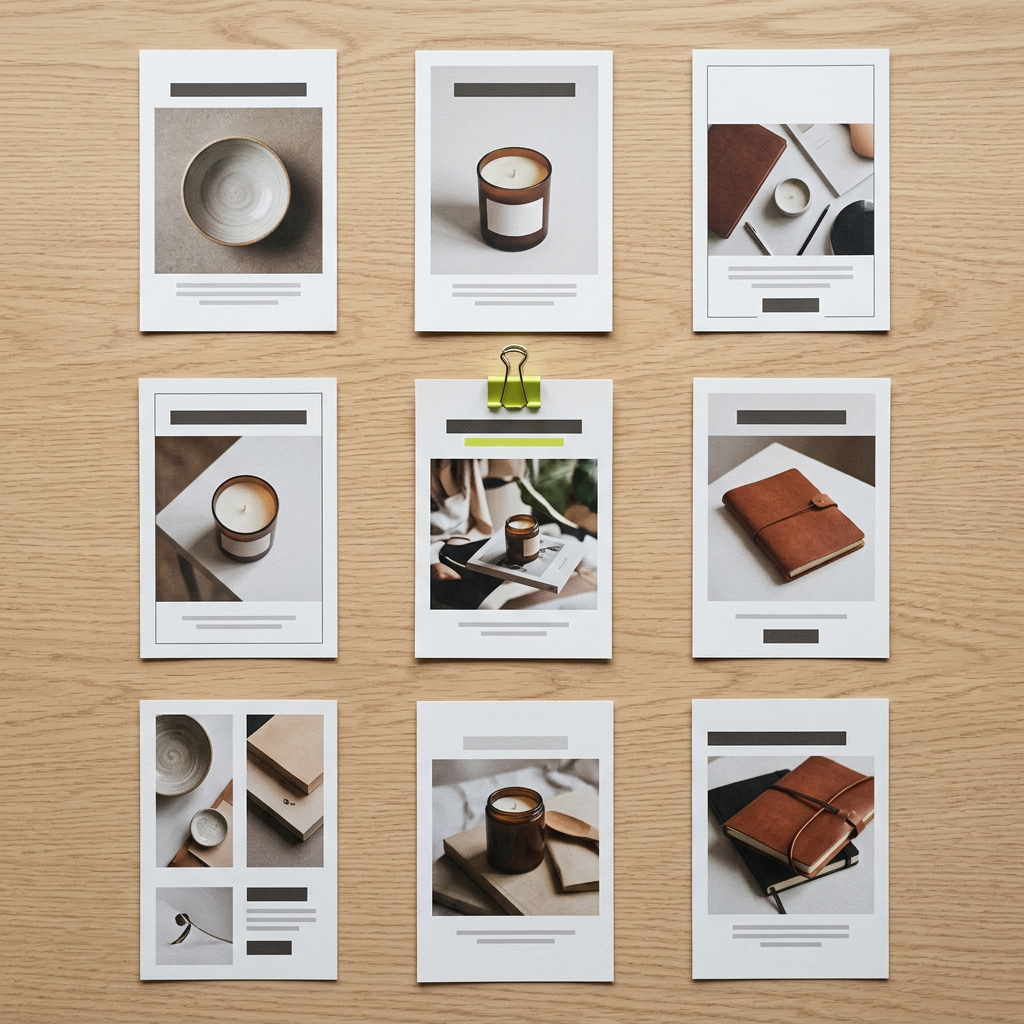
This is where AI creative generation tools earn their place. They don't replace strategy. They're the execution layer that makes rigorous isolation practical. Instead of rebuilding a whole ad to swap one hook, you generate a batch of variants from a single base asset, changing exactly one element at a time, which is the discipline a valid A/B test requires. Platforms built for this (AdGenz among them, plus the options compared on our AdCreative.ai alternatives page) can turn out hook-only or offer-only variant sets far faster than a manual edit cycle, so you can run the isolated testing plan above instead of compromising on it.
Methodology and tooling aren't separate concerns. A perfect framework that takes a month to produce assets will lose to a good-enough one that ships variants weekly. Get the statistics right, keep isolation disciplined, and let faster production keep the whole system running.
Put this into practice
Generate on-brand Meta ads — angles, formats, hooks and copy — in minutes.
Start freeFrequently asked questions
Plan on at least 7 days. That clears most of the learning phase, captures a full weekly cycle including a weekend, and gives each variant fair delivery. Stop early only if each arm has already hit your predefined sample size and Meta's test tool reports a confident result.
A common working threshold is around 50 conversions per variant before trusting a conversion-based comparison, and more is better for small differences. Low-volume accounts should screen creative on an upper-funnel metric like CTR or hook rate first, then confirm the top candidates on conversions with more budget.
You can, but you lose the ability to say which change caused the result. If you change the hook and the offer together, a win tells you the combination worked, not which half mattered. You would need a follow-up isolation test to learn something reusable.
Keep reading
How to Set Up a Meta Ads Creative Test That Gives You Reliable Data
A tactical walkthrough for setting up Meta creative tests in Ads Manager: budgets, duration, and sample sizes that hold up when you scale.
Meta Ads Manager Creative Reports Explained: Which Metrics Actually Predict Winners
How to read hook rate, hold rate, CTR and CPA in Meta Ads Manager, and which metric should drive each kill or scale call.

Creative Testing Variables: What to Change Between Ad Versions (Hook, Angle, Format, Offer)
A variable-isolation framework for Facebook ad testing: what to change between ad versions, how to sequence tests, and how to read the results.